Families are choosing nothing because they do not know what else is possible.
Most funeral homes are fully capable of helping families create something personal and fitting.
The problem is timing.
By the time many families call, the death has already occurred, emotions are high, decisions are rushed, and the family has already decided what kind of farewell they think is possible.
The Near-Need Support System helps your funeral home reach families earlier, introduce the Third Option, and become the trusted guide before the at-need call ever happens.
Built for funeral home owners who know families need more than a transaction.
The family who needs you most often meets you too late.
A family calls after a death.
They are tired. They are overwhelmed. They may have heard their mother or father say, "I don't want a funeral."
So they believe they have two choices.
Choice one
Hold a traditional service that does not feel right.
Choice two
Do nothing.
Most choose the option that feels least complicated.
Not because they care less.
Because they do not know what else to do.
That is the real problem.
Not your staff.
Not your facilities.
Not your ability to serve.
The problem is that the family does not discover what you are capable of until the moment when they are least able to think clearly.
This is not a failure of care. It is a failure of timing.
Families arrive rushed, guarded, and already half-decided.
You have seen this more times than you can count.
A family says, "We just want something simple."
Sometimes they mean simple.
Often they mean something else.
- They mean they are tired.
- They mean they do not want to violate someone's wishes.
- They mean they cannot imagine sitting through a service that feels formal, generic, or false.
- They mean they do not know how to create anything more personal.
So the conversation gets smaller.
Price. Packages. Availability. Disposition. A short gathering, or no gathering at all.
The family leaves with something technically complete, but emotionally unfinished.
They did not choose less because they cared less. They chose less because no one showed them a better path in time.
There is a third option between a funeral that does not fit and doing nothing.
The Third Option is a simple, personal farewell.
It may be small. It may be informal. It may happen in your facility, at a restaurant, at home, at a church hall, or in a place that mattered to the person who died.
But it does three things families still need.
It gathers the right people.
The people who knew the person, who carry the stories, who need a moment to be together before life moves on.
It tells the right stories.
The ones that capture who the person truly was. The ones that would be lost if no one made space to share them.
It creates a moment that fits.
Not a template. Not a package. A Farewell Gathering shaped around the person and the family it is meant to serve.
Most families do not reject meaning.
They reject the version of a funeral they can picture.
The opportunity is to help them see another path before they decide that nothing is the only honest choice.
You came into this work to help families when it matters.
You already know how to care for families.
You know how to walk into a hard room.
You know how to steady people when their world has shifted.
You know how to handle details most families cannot even name.
But the market has changed.
More families are choosing cremation. More families are avoiding formal services. More families are saying no before they understand what they are saying no to.
That creates a new question for serious funeral home owners.
How do you serve families before their decision has already narrowed?
That is where the Near-Need Support System comes in.
It does not replace your care.
It gets you into the relationship early enough for your care to matter.
The Near-Need Support System gives you a new front door.
The system reaches the family planner before the death. Usually the adult daughter or close family member who is already carrying the practical and emotional weight of a parent's decline. She is not looking for a funeral home yet. She is looking for help.
Your Farewell Guide gives her language, guidance, and a path. Over time, it introduces the Third Option and invites her to connect with a local professional who understands this approach. That local professional can be you.
Attract
Facebook and Instagram ads reach family planners in your service area with a useful message, not a funeral sales pitch.
The ad speaks to the real situation: someone they love may have said they do not want a funeral, but the family still does not want the life to go unmarked.
Engage
She lands on YourFarewellGuide.com and opts in for a free resource or watches the Third Option video.
She receives practical help first. No pressure. No package. No sales conversation.
Educate
An email and video sequence helps her understand that "no funeral" does not have to mean no goodbye.
She learns how to gather stories, ask better questions, think through the family dynamics, and imagine a farewell that actually fits.
Connect
When she is ready, she is invited to connect with a local professional who works within the same framework.
Her zip code routes her to the sponsoring funeral home in her area. The relationship does not begin with a cold call. It begins with shared language.
Support
Your first conversation is not a pre-need sales call. It is a near-need support conversation.
You listen. You understand the family situation. You ask what the person has expressed. You help her think clearly before the pressure peaks.
This is where a funeral home stops being one more option and becomes the obvious call.
Serve
When the death occurs, the family already knows you. They are not starting from zero. They are not searching Google at midnight. They are not comparing you to the cheapest direct cremation provider.
They call the person who already helped them.
The system creates the opportunity. The funeral home honors it.
Lead generation gives you names. This system builds trust.
Most marketing campaigns try to find families at the moment they are ready to buy.
That is too late.
By then, many families have already reduced the decision to price, speed, and convenience.
Most marketing campaigns
Find families when they are already deciding.
- Reach families after the death
- Compete on price, speed, and availability
- Arrive as strangers asking for arrangements
- Have no framework to offer beyond packages
- Miss the families who choose nothing before calling
Near-Need Support System
Reach families before the decision is made.
- Help families before they are shopping
- Give them language before they are overwhelmed
- Introduce your firm before the death occurs
- Create a reason to trust you before anyone asks for arrangements
- Reach the families who would otherwise choose nothing
That changes the at-need call.
The family does not arrive as a stranger. They arrive with context. They have already been helped.
The system is simple, but it is not passive.
A sponsoring funeral home commits to four things.
Fund the local campaign
You sponsor the campaign in your market. Funeral Success Marketing manages the ads, landing pages, email sequence, routing, reporting, and optimization. You do not have to write ads or manage platforms.
Receive warm introductions
When a family in your area asks for local help, the contact is routed to your funeral home. You receive the contact information, basic context, and a suggested opening that connects your conversation to the framework she has already been learning.
Respond within 24 hours
A family in this season is living a full, stressful life. If she asks for help and hears nothing for a week, the moment is gone. Sponsors commit to timely response. This is not optional. It is the commitment that makes the system work.
Have a different first conversation
The first conversation is not about packages. It is about the family. Where are they in the journey? What has their loved one said? What are they worried about? What would feel wrong? What would feel true? That conversation is where trust begins.
This is where a funeral home stops being one more option and becomes the obvious call.
Families trust the professional who helped before the crisis.
Most families do not want a transaction at the hardest moment of their life. They want someone who understands what is happening and can help them make decisions they will not regret.
When you enter the relationship earlier, four things change.
Source: Johnson Consulting Group Performance Tracker, 113,921 transactions, 2024
Many families who choose direct cremation or no service are not unreachable. They are unreached.
When they are guided toward the Third Option, some will still choose something small. But small no longer has to mean empty. A cremation with a personal Farewell Gathering creates more value for the family and more revenue for the funeral home than a direct cremation with no service.
But the deeper business value is not one case. It is the shift in market position. You become the funeral home families already trust before they call.
You stop competing. You become the obvious choice.
See exactly how the Near-Need Support System works.
Watch the webinar. Walk through the full system. Understand what it takes to become the sponsoring funeral home in your community.
Watch the Near-Need Support WebinarOne sponsor per market. Fit matters more than speed.
This is for funeral home owners who know the service model has to change.
This is not for every firm.
- Owners who believe families still need meaning, even when they do not want a traditional funeral.
- Firms that are tired of watching families choose nothing because nobody showed them a better path.
- Owners who want to compete on trust, guidance, and experience, not just price and availability.
- Funeral homes willing to meet families earlier and serve them differently.
- Owners who believe the farewell should reflect the person who died, not just the disposition method the family selected under pressure.
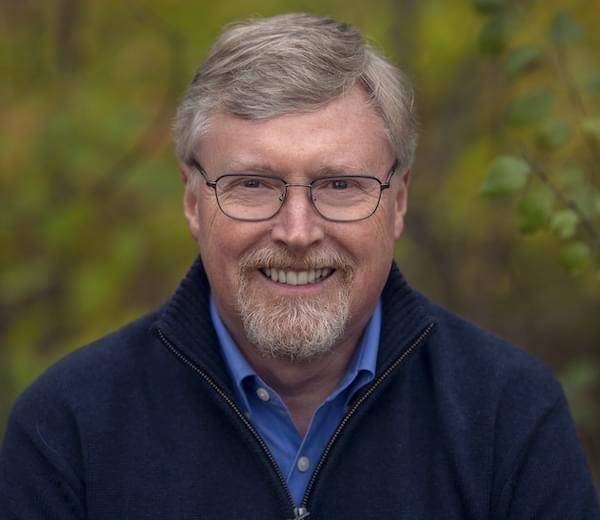
John H. Callaghan
Creator, Near-Need SupportI'm John H. Callaghan. For more than twenty years, I have worked with funeral home owners across the United States, Canada, and Australia.
I have seen the same problem in market after market. Funeral homes are capable of more than families ever get to experience. Not because directors do not care. Because the first real conversation often happens too late.
The Near-Need Support System was built to change that. It gives funeral homes a practical way to reach families earlier, introduce a better option, and build trust before the at-need call arrives.
My role is not to replace what you do. My role is to help you create the conditions where families can finally see what you do best.
funeral industry
problem everywhere.
should fit the person.
Watch the Near-Need Support Webinar.
In this webinar, you will see how the system works, how families are reached, how the Third Option is introduced, how local handoffs happen, and what it takes to become the sponsoring funeral home in your market.
No pressure. No sales call hiding behind the curtain. Just the model, the mechanics, and the question that matters.
One sponsor per market. Fit matters more than speed.
You do not need more families who barely know you.
You need more families who trust you before they need you. The families are already there. They are caring for aging parents. They are trying to honor wishes. They are quietly wondering what they are supposed to do when "no funeral" does not feel like enough.
Watch the WebinarThe question is whether they will meet you in time.